Tokyo Disney Resort
Tokyo Disney Resort is extremely popular with the Japanese and has been very profitable for the Oriental Land Company, which owns and operates the resort. (That’s right, the Walt Disney Company does not own or operate Tokyo Disney. Disney provides the Imagineers, gets final say on certain aspects of the park and gets a piece of the profits, but that’s it.)
Tokyo Disney Resort has two theme parks: Tokyo Disneyland and Tokyo DisneySea.
Tokyo Disneyland is sort of a cross between Disneyland in California and Magic Kingdom in Florida, but it has a unique layout and there are quite a few other surprises. Some of the attractions are different. For instance, Pooh’s Hunny Hunt is nothing like the Pooh rides in the US. It’s a spectacular ride in Tokyo. Some of the shows at Tokyo Disneyland do not exist elsewhere. There is also a do-not-miss, spectacularly-themed buffeteria restaurant called Queen of Hearts Banquet Hall.
Tokyo DisneySea is ocean-themed, with “ports” instead of “lands.” They even call the employees “crew members” instead of “cast members.” It is a fantastic theme park that no Disney fan should miss. Start saving your pennies for a trip to DisneySea now! You won’t believe what Disney’s Imagineers can do when provided with the necessary resources. It puts the other Disney theme parks to shame. Virtually all of the attractions at DisneySea were created especially for this park and so far have not been duplicated elsewhere.
The resort also includes several Deluxe resort hotels, the Art Deco-style Disney Ambassador Hotel, the Italian-themed Hotel MiraCosta, the traditional-style Disneyland Hotel and the new Fantasy Springs Hotel near the new Fantasy Springs port in Tokyo DisneySea. Tokyo Disney has one Moderate resort, Toy Story Hotel. There is one Value resort, Disney Celebration Hotel, however this hotel is not located in the Resort area.
Rounding out the resort is Ikspiari, a shopping and dining center.
Jump to:
An Affordable Dream?
As long as the Yen is relatively weak against the Dollar (trading at 95 Yen or more to the Dollar), visiting Tokyo Disney Resort is not all that expensive for US residents. In fact, if you can afford to fly to Walt Disney World and stay in a Moderate or Deluxe hotel, you can almost certainly afford to visit Tokyo Disney Resort.
Airfares are not an insurmountable barrier. Everyday off-season (non-summer) fares from the West Coast of the US are frequently under $1100 roundtrip in Coach, and sale fares can be as low as $650-$700. If you have any frequent flyer miles accumulated, we strongly recommend using them to upgrade from Coach to Business class (or if you have enough miles, redeem them for free Business class tickets) because it is a long flight. Another good option: ANA and other carriers also offer a Premium Economy service that is actually very comfortable, and basically comparable to flying in First Class on domestic carriers. From Los Angeles, the travel time is 11.5 hours going to Japan and 9.5 hours returning (it’s faster coming back due to the jet stream). From Seattle, it’s about 10 hours going and 8.5 back. Read our tips and tricks to help you find the best airfares.
Tickets for the Tokyo Disney Resort theme parks are much less expensive than tickets for the US theme parks! (As of April 2021, they cost about 50%-70% as much as equivalent Disneyland California tickets and about 45%-60% as much as equivalent Walt Disney World tickets.) One quirk to keep in mind is that you cannot “hop” between parks on 1-day or 2-day tickets. If you buy 3-day or 4-day tickets, you can “hop” only on the third and/or fourth days (unless you stay in a Disney hotel, in which case you can buy special tickets that allow hopping on any day). On most Saturdays, Sundays and holidays, you can buy lower-priced “after 3:00 pm” tickets, and on most week nights (Monday-Friday) you can buy discounted “after 6:00 pm” tickets. There is a discounted 1-day Senior Passport (age 60 and over). Four days is the maximum length of a regular passport. Annual Passports are available, but are very expensive.
Meals at Tokyo Disney Resort are generally somewhat more expensive than in the US Disney theme parks. Full-service dinners (especially character meals) at the official hotels are especially expensive. However, there are significantly less expensive dinner options at Tokyo Disney Resort, including non-character buffets and “buffeteria” locations. Full service lunches are a lot cheaper than dinners, so if you want to experience the nicer restaurants, do it at lunch! As you’ll find elsewhere in Japan, “lunch sets” (full meals that can include appetizer, entree, dessert and/or drink) are well-priced. Counter-service meals are generally reasonable, with many offering higher-end dining options than you’d find at Walt Disney World. Most snacks and beverages from the theme park vending carts are similarly priced to the US parks, or perhaps a tiny bit cheaper.
If you’re worried that the food will all be unusual and Japanese, it’s really not. The vast majority of the food items in the parks are familiar to any American or European, partially because Japanese visitors to the park want to eat “exotic” (i.e. American) food, but also because Tokyo has a wide variety of food available, and Japanese people tend to be pretty familiar with foreign foods. You can easily find hamburgers, hot dogs, sandwiches, fried chicken fingers, etc. Sometimes you’ll find that a food comes with slightly different condiments or sides, but for the most part even the most picky eaters should find plenty they can recognize. For those who actually do want something exotic, you can find some unusual items here and there, and there are two traditional Japanese restaurants inside the parks that serve fairly straightforward lunch combinations like tempura, chicken teriyaki, tonkatsu and so forth, each served with some rice, miso and pickles.
Some sample meal prices from early 2021:
- Magellan’s (high-end table service restaurant in DisneySea): full adult lunch with starter, entree, dessert, bread and coffee or tea ¥4600-¥5800; child lunch or dinner “set” ¥2100; full adult dinner with hors d’oeuvre, salad or soup, entree, dessert, bread and coffee or tea ¥5800-¥8000
- Vulcania (“buffeteria” casual restaurant in DisneySea): chef’s special (full adult meal with appetizer or dessert and drink) ¥1880; adult entrees ¥980 each; child “set” (full meal with dessert and juice) ¥940; desserts, soups and salads ¥400-¥500; soft drink ¥320; iced tea, coffee ¥370
- Counter service restaurants: meal “sets” (entree, salad and drink, and sometimes a dessert) ¥1000-¥1800; entrees ¥700-¥950; french fries ¥220; small soft drink, iced tea, coffee ¥300; Kirin draft beer ¥620; desserts ¥370-¥550
- Snacks from theme park food carts: packaged ice cream treat ¥400; box of popcorn ¥400; souvenir popcorn bucket ¥2400; turkey leg ¥800
Hotels are the most expensive aspect of visiting Tokyo Disney Resort. Land is extremely precious in Japan and that is very much reflected in the cost of hotel rooms. If you want to stay on-site at one of the three Disney-owned Tokyo Disney Resort hotels, the cheapest room at Ambassador Hotel, in the lowest-priced season in 2021, is ¥32000 a night. Fortunately the resort is very close to central Tokyo — about 15-20 minutes by commuter train from JR Tokyo Station — so there are many other possibilities. See the Hotel Options section below for suggestions.
Hotel Options
An important thing to bear in mind is that Japanese hotels typically charge per person, not per room, though if you’re booking at a big international chain or through an online travel agency like Expedia or Orbitz that shouldn’t be an issue; just enter the total number of people and it’ll show you the available rooms and how many people they sleep. (Unless otherwise noted, prices quoted below are for a double room sleeping two people.) Many Japanese hotel rooms are so small that they don’t sleep more than two, or at most three, people. That can be an issue if you’re travelling with a family: you may need to book two rooms, depending on the hotel.
Japanese hotels may be set up with beds that are labeled “single” but are a size we don’t have in America, about the length of an American single and about midway in width between a single and a double. They’re usually set with two small pillows side-by-side, and two small children could share one, but two adults would feel very cozy, maybe not in a good way. When in doubt, search for an email contact for the hotel and ask questions; most hotels communicate quite well in written English, but understanding spoken English over a phone may be difficult.
Some hotel rooms will have “double” beds, which might be any size from what Americans would call a “double” all the way up to a “king.” There often aren’t very many of rooms with double beds and they tend to book up fast. It’s not uncommon to find all the double rooms booked and only single rooms available. The hotel may be willing to push two singles together and get something closer to a wide king bed, albeit one with a bit of a gap in the center; they offered to set one of our rooms up this way at the Disney Ambassador, so feel free to ask.
You will find that American-style double-sized beds are more common in American and European chains like Sheraton and Hilton. The official Disney hotels tend to follow the Japanese model with lots of single beds and very few double beds.
Jump to:
- Deluxe Disney Hotels
- Moderate Disney Hotel
- Value Disney Hotel
- Official Hotels
- Hotel Dream Gate
- Partner Hotels
- Toyko Hotels
The Deluxe Disney Hotels are all very nice, and very expensive. You get a few special perks for staying in the official Deluxe Disney hotels. These change from time to time, but as of April 2021 the important ones are:
- Guaranteed entrance to the parks, even when they have to close them to walk-up guests because of capacity.
- 15-minute early entry every day to either park. Only one area of the park and one ride will be open during that 15 minutes. Generally it’s whatever ride is the newest and/or the most popular. When we were there, it was Toy Story Midway Mania in DisneySea and Monster’s Inc. Ride & Go Seek! in Disneyland.
- You can purchase special tickets that allow park hopping on any of the days, not just on the 3rd or 4th day. They cost about ¥2000 more (per ticket, not per day).
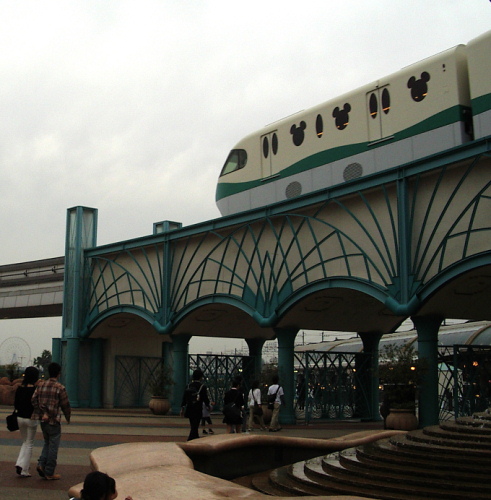
- Free pass to the monorail, which normally has a small fee to ride. Just ask for a monorail pass when you check in if they don’t give you one.
- Delivery of your purchases to your hotel room.
Of the perks listed above, the 15-minute early entry and free monorail are the most useful, but even they aren’t that useful. A monorail pass is worth ¥350-¥650 per day, and 15 minutes isn’t a big head start; it basically gets you one extra ride. On our last trip we bought the special park-hopping tickets, but didn’t actually do any hopping on the first two days, so they didn’t really add any value for us. It’s really not a huge inconvenience to not be able to hop on the first two days. The primary reasons to stay in the Disney hotels are to get more Disney magic in your trip, via the lovely design and theming of the Disney hotels, and to get a somewhat shorter trip into the parks each morning.
Disney Ambassador Hotel is a lovely Art Deco hotel located right next door to the Ikspiari shopping center at the entrance to the resort. It will cost you ¥32000 or more per night, depending on season, for the the lowest-priced double room). It has just over 500 rooms. Standard rooms have two regular single beds and a trundle bed and sleep up to 3 people. There are a variety of family rooms and suites that can handle 4 or more, though not very many of them. The Ambassador is located about halfway between the entrance gates to the two Tokyo parks. You can walk to either park (about 20 minutes), or take a 5-10 minute bus ride to either of them. The buses come about every 8-10 minutes; there’s a printed schedule and they keep to it. You can use the monorail, but it’s about a 10 minute walk through the maze-like halls of Ikspiari to get to the Monorail stop; the buses are much more convenient.
Fantasy Springs Hotel is located inside Tokyo DisneySea’s newest port, Fantasy Springs, with a special entrance just for hotel guests. The hotel is made up of two buildings: the deluxe Fantasy Chateau (with 419 rooms) and the luxury Grand Chateau (with 56 rooms, each with a balcony or terrace). Most rooms in both buildings sleep up to 4 people, but there are 250 room in the Fantasy Chateau that sleep up to 5 people. Standard rooms have 2 regular single beds, a trundle bed and an alcove bed.
Hotel MiraCosta is a luxurious, beautifully-themed hotel located right at (actually inside) Tokyo DisneySea, and has its own private entrance into that park. The lowest-priced double rooms at this hotel cost ¥48000 or more per night, depending on season. This hotel is about the same size as the Ambassador (about 500 rooms), but it’s much prettier and extremely convenient to DisneySea, which means it tend to book up solid, even in low season. You may need to start looking very early and/or keep checking availability to snag a room here. Standard rooms have two regular single beds and a trundle bed and sleep up to 3 people. There are a variety of family rooms and suites that can handle 4 or more, though not very many of them. Tokyo Disneyland is about a 6-8 minute monorail ride away.
Tokyo Disneyland Hotel is the largest of the three on-site resorts (about 700 rooms) and features a Victorian architectural style similar to the Grand Floridian Resort at Walt Disney World. It’s located right outside the front gates of Tokyo Disneyland. The lowest-priced double rooms are ¥32000 or more per night, depending on season. Standard rooms have two regular single beds and a trundle bed and sleep up to 3 people. There are a variety of family rooms and suites that can handle 4 or more, and there are more of them than at the other two hotels. To get to DisneySea, you just take a 6-8 minute monorail ride.
There are four seasons at the Disney hotels: Value, Regular, Peak and Top. Value season is mainly weekdays in January and February. Regular season is mainly weekdays in May, September, October, November and the first half of December. Peak and Top seasons include most Fridays, Saturdays and Sundays, the last half of July, all of August and the late December through early January holiday season.
Obviously it’s best to avoid Peak and Top seasons, both because of high prices and because of crowds. Read more about the best time to visit Tokyo Disney Resort.
Online reservations are available for the Tokyo Disney Resort hotels, but not all rooms are available online. If you can’t get what you want online, try calling. From the US, you must call 011-81-45-683-3333 between 9:00 am and 9:00 pm Japanese time. That is normally 15-17 hours ahead of US time, but it’s 14-16 hours ahead during Daylight Savings Time, because Japan does not participate in the time change. For instance, from California this would mean calling between 4:00 pm and 4:00 am PST, or between 5:00 pm and 5:00 am PST when Daylight Savings is in effect.
When you call to make a reservation, you will initially hear a recording in Japanese, but the recording then welcomes you in English and tells you if you need to speak to someone in English to please press 9 and then 1. The operators speak excellent English and are very efficient.
Toy Story Hotel is a moderate Tokyo Disney Resort hotel. The hotel’s décor and theming is based on the Toy Story films. It has 595 rooms. All rooms feature a design inspired by Andy’s room, including blue sky and white cloud wallpaper. A standard room for 3 people has two twin beds and a trundle bed; a standard room for 4 people has three twin beds and a pull-down bed. Other features include a Slinky Dog play area and the Lotso Garden Cafe, which serves a breakfast and dinner buffet. There is a monorail stop (Bayside Station) just outside the hotel. There is a small fee to ride the monorail.
Disney Celebration Hotel is the only Value hotel at Tokyo Disney Resort. It has just over 700 rooms in two buildings: Wish and Discover. It is the only Disney hotel not in the resort area; it is in the Shin-Urayasu area, which is about a 15-minute drive from the resort area (there is a FREE shuttle bus to each of the parks). The décor is inspired by the Disney Parks themselves – with chairs and tables in the lobby look like the teacups from the Mad Tea Party and couches modeled after the flying carpet from Disney’s Aladdin. Prices start at ¥22000 per room (for up to 4 guests) per night, depending on season. Standard rooms have two regular single beds and 2 daybeds and sleep up to 4 people. Each building offers a buffet breakfast only.
You get a few special perks for staying in a Value Disney hotel. These change from time to time, but as of April 2021 the important ones are:
- Guaranteed entrance to the parks, even when they have to close them to walk-up guests because of capacity.
- 15-minute early entry every day to either park. Only one area of the park and one ride will be open during that 15 minutes. Generally it’s whatever ride is the newest and/or the most popular. When we were there, it was Toy Story Midway Mania in DisneySea and Monster’s Inc. Ride & Go Seek! in Disneyland.
- You can purchase special tickets that allow park hopping on any of the days, not just on the 3rd or 4th day. They cost about ¥2000 more (per ticket, not per day).
Of the perks listed above, the 15-minute early entry is the most useful, but isn’t that useful. Fifteen minutes isn’t a big head start; it basically gets you one extra ride. On our last trip we bought the special park-hopping tickets, but didn’t actually do any hopping on the first two days, so they didn’t really add any value for us. It’s really not a huge inconvenience to not be able to hop on the first two days. The primary reasons to stay in the Disney hotels are to get more Disney magic in your trip, via the design and theming of the Disney hotels.
There are four seasons at the Disney hotels: Value, Regular, Peak and Top. Value season is mainly weekdays in January and February. Regular season is mainly weekdays in May, September, October, November and the first half of December. Peak and Top seasons include most Fridays, Saturdays and Sundays, the last half of July, all of August and the late December through early January holiday season.
Obviously it’s best to avoid Peak and Top seasons, both because of high prices and because of crowds. Read more about the best time to visit Tokyo Disney Resort.
Online reservations are available for the Tokyo Disney Resort hotels, but not all rooms are available online. If you can’t get what you want online, try calling. From the US, you must call 011-81-45-683-3333 between 9:00 am and 9:00 pm Japanese time. That is normally 15-17 hours ahead of US time, but it’s 14-16 hours ahead during Daylight Savings Time, because Japan does not participate in the time change. For instance, from California this would mean calling between 4:00 pm and 4:00 am PST, or between 5:00 pm and 5:00 am PST when Daylight Savings is in effect.
When you call to make a reservation, you will initially hear a recording in Japanese, but the recording then welcomes you in English and tells you if you need to speak to someone in English to please press 9 and then 1. The operators speak excellent English and are very efficient.
Near the theme parks, and connected to them by the Disney Resort Line monorail service, are six full-service “official” hotels: Hilton Tokyo Bay, Sheraton Grande Tokyo Bay, Tokyo Bay Maihama Hotel, Tokyo Bay Maihama Hotel Club Resort, Hotel Okura Tokyo Bay and Sunroute Plaza Tokyo.
These hotels have a few special “perks.” Most notably they have free bus service to the Disney Resort Line monorail station (though none of them is very far from the station; it’s probably faster to walk in many cases), and guaranteed admission to the parks even when Disney closes the parks when they hit capacity (which happens often during peak times). You can, if you want, walk from your hotel to Tokyo Disneyland, but it’s a pretty long walk (25-40 minutes). The walk to DisneySea is even longer (45-60 minutes). Realistically you’ll be taking the monorail to the parks. The monorail, unfortunately, is not free for guests of the Official hotels; you’ll need to get a day pass, pay for each trip, or use a Pasmo or Suica card (a rechargeable train pass available in nearly any Tokyo subway or train station) to pay for each of your trips.
Hilton Tokyo Bay and Sheraton Grande Tokyo Bay are both very nice hotels and can be easily booked through their respective websites in English. Both have English-speaking staff members.
- If you are fortunate enough to have a lot of Hilton Honors or Marriott Bonvoy points built up, you might be able to get a “free” stay at one of these two hotels by using your points.
- Otherwise, count on paying a minimum of ¥20000-¥40000 per night, depending on season, for a standard double room. However, if you watch carefully, you may be able to score a last-minute deal. MouseSavers.com reader Larry N points out that he kept checking rates on the Hilton Tokyo Bay website even after he had booked his room. At the last minute he paid just over half of the original rate he’d booked.
- Another option is booking way in advance. MouseSavers.com reader Cynthia reports that the Hilton Tokyo Bay hotel rooms can be booked up to 2 years in advance. In October 2006 she began to plan her trip for November 2008. She was able to get a fantastic pre-paid and non-refundable rate, but she reports that she also had the option of reserving a slightly higher, but still very good rate that included a breakfast buffet for her entire family of 4 and was refundable/changeable. She also notes that the Sheraton Grande Tokyo Bay can be booked up to 18 months in advance.
- Several of these hotels can be booked through online travel agencies like Orbitz, which is handy if you’ve built up a stash of Orbucks or other loyalty points you want to use.
Another MouseSavers.com reader, Richard K, reports, “I’ve been to The Tokyo Disney Resort half a dozen times and stayed at two hotels: The MiraCosta and the Hilton Tokyo Bay. I am a DVC member and always stay at Disney hotels whether on the east or west coast of the United States. That said, I now ALWAYS stay at the Hilton in Tokyo Disneyland. Considering that it is half the price per night of the MiraCosta or Ambassador hotels, it is (in my opinion) nicer! I always have (for Japan) an unusually large room with two beds and an ocean view. It’s really a lovely hotel and I think a better option for more of your readers than MiraCosta or Ambassador which, in addition to being more expensive, are much harder to actually get into!”
Hotel Dream Gate Maihama is located at JR Maihama Station, the train station that serves Tokyo Disney Resort. Rooms at this hotel are somewhat spartan, with single beds only (up to 3 per room) and still quite expensive, depending on season.
Rooms may be noisy due to the trains overhead. Dream Gate is primarily marketed to Japanese people and the English language website is pretty minimal. The hotel staff speak a little English.
Tokyo Disney Resort has a group of “Partner Hotels” that are outside the immediate resort area.
Bookings for these hotels can also be made via Disney Resort Reservations Center at 011-81-045-683-3333 (9:00 am – 9:00 pm Tokyo time). The phone system is automated and initially the “person” will speak in Japanese. Wait all the way till the English spiel starts and then proceed from there.
Fortunately Tokyo Disney Resort is not far from the eastern districts of central Tokyo. From JR Tokyo Station, it’s about a 15-minute train ride to JR Maihama Station at Tokyo Disney Resort. The trains run very frequently and absolutely on time. There are a wealth of hotel options if you stay in Tokyo. When you get to Maihama, it’s a pretty quick 5-10 minute walk to Tokyo Disneyland, or you can take the monorail to either park.
The thing to keep in mind about Tokyo is that there are no “bad areas” — some are nicer or more convenient than others, but none are dangerous. The overall quality of Tokyo hotels is very good. You can count on cleanliness even at the lower end, though rooms are often very small in less expensive accommodations.
We recommend checking Expedia and searching by price. Expedia frequently has very decent 2-star and 3-star Tokyo hotels at low rates ($100 or less).
Another worthwhile option to consider is Priceline. Only a few hotels in Tokyo seem to be participating in Priceline, which allows you to choose an area and a quality rating (up to 5 stars), but does not allow you to pick the exact hotel. All of the hotels are very nice, though you should expect small rooms, as is typical of Japanese hotels. Most rooms will have either two twin beds or one small double bed in the room — it is highly unlikely you’ll get a room that sleeps more than two.
Transportation
Jump to:
- Getting To and From Tokyo Disney Resort
- Airport Limousine Bus (“Limo Bus”) Service
- Getting Around on Japan Rail (JR) and Subways
- Taxis
Getting To and From Tokyo Disney Resort
To get to Tokyo Disney Resort directly from Narita airport, simply go to the Airport Limousine bus counter (it has a bright orange logo that says “Airport Limousine” or “Friendly Airport Limousine”) and buy a ticket for your specific hotel in the Tokyo Disney Resort area (¥2450 adult/¥1230 child, one way). The buses run frequently and will take you straight to the resort in about 60 minutes. If you come in too late (after 5:00 pm) and have missed the last bus to the Tokyo Disney area, you can take an Airport Limousine bus to the Oriental Hotel Tokyo Bay in Shin-Urayasu, which is fairly near Disneyland and then take a 5-10 minute cab ride to your final hotel. Buses to Shin-Urayasu run until about 8:30 PM. If you come in later than that, you may need to take a cab from the airport to Tokyo Disneyland, which will be somewhat expensive (¥16,000 – ¥20,000).
Coming back from Tokyo Disney Resort to Narita, at least a day before you leave ask at your hotel’s concierge or bell desk for a ticket for the Airport Limousine to Narita. They will set you up with a reservation and ticket and tell you when you need to be there to get your bus. Be there on time; everything in Tokyo runs on time and the bus stops for just a minute or two, so don’t miss it.
To get from central Tokyo out to the resort, get to JR Tokyo Station and find your way to the JR Keiyo Line. (It’s a long walk — be prepared!) When you reach the gate for the Keiyo Line, put your JR ticket through the gate (or tap your Pasmo or Suica card on the glowing RFID reader). Hold on to your ticket, which must be inserted/tapped at the gate on your way out of the destination station.
If you don’t already have a JR ticket, you can buy one from the machines on the walls in the main part of the station, before heading off to the Keiyo Line. There is a button in the upper right corner of the ticket machines’ screens marked “English” that will make the machines switch languages. If you are not sure of the exact fare, you can buy the least expensive fare and then stick your ticket in the “Fare Adjustment” machines before you exit on the other end. The machines will will tell you how much more you owe. Insert that amount and it will be added to your ticket.Alternatively, you may want to consider buying a Pasmo or Suica card.
From JR Tokyo Station, you can take pretty much any Keiyo Line or Musashino Line train (which is just a variant on the Keiyo Line), since they all seem to stop at JR Maihama Station, the station at Tokyo Disney Resort. If you take a “Local” train, Maihama will be the sixth stop; if you take a “Rapid” train, it will usually be the third stop. Normally there will be lots of families and schoolkids on the train, and they’ll all get off at Maihama, which will be a good indication if for some reason you’re unsure. When returning, just make sure you’re getting on a train going to Tokyo. That’s the last stop, so it’s pretty idiot-proof.
The fare will vary depending on where you start from and whether you use a JR train to get to JR Tokyo Station, but it will be relatively inexpensive, typically ¥400 or less.
Airport Limousine Bus (“Limo Bus”) Service
The easiest way to travel between Narita Airport (NRT) and Tokyo (including Tokyo Disneyland) is to use the Airport Limousine bus service, often called the “limo bus.” Despite the name, this is not a limousine; it’s a bus service, and while lots of people call it the “limo bus,” the company name is actually “Airport Limousine” or “Friendly Airport Limousine” (different posters and signs use either interchangeably). The Airport Limousine buses are frequent and go directly to major hotels in Tokyo and to Tokyo Disneyland. One major advantage of this service is that they handle your luggage for you and take you door-to-door.
Due to traffic it takes quite a while to get into Tokyo. Budget for 60 minutes to Tokyo Disney Resort, 90 minutes to the eastern Tokyo districts (Ginza, Shimbashi) and 2 hours to the western districts (Shinjuku, Roppongi), and if it takes less, count your blessings. Also, the seats are narrow, so if you’re a big person, be prepared for a tight squeeze.
Airport Limousine has somewhat limited service going to the Tokyo Disneyland Resort from Narita. The last bus typically leaves around 5:00 pm, so take that into account when booking your air ticket. You can look up departure times on the Airport Limousine website. Buses run later going into Tokyo.
If you find that you’ve missed the last direct bus (especially if you arrive after 5 pm), they might suggest you go to Shin-Ureyasu station, which has later bus service and is one stop (about 2.5 miles) from the Tokyo Disney Resort. You can easily get a train from there to Maihama station, which is actually at the resort. Taking the train does mean handling your own luggage, and when you get to Maihama you’ll still need to get to your hotel. A better option is to take a taxi direct to your hotel once the bus drops you at Shin-Ureyasu station (about 10-15 minutes, ¥1500-2000).
When going into Tokyo proper, you may find that the next bus that goes directly to your hotel is an hour or more away, and they might suggest (or you might choose) to go to the Tokyo Central Air Terminal (TCAT) station, and then take a cab from there. This is a perfectly fine approach for many hotels in the central area (basically the area near Tokyo train station). There are always buses going to TCAT leaving about every 5-10 minutes and the fare is usually much cheaper (though you’ll still have to pay cab fare, which might wipe out any savings). There are lots of cabs near TCAT, and just about any Tokyo driver can understand enough English to get you to a major hotel. Just in case, it’s a good idea to have a Tokyo map with your hotel marked on it, or the name and address of the hotel in Japanese, so you can show the driver where you need to go.
Getting Around on Japan Rail (JR) and Subways
The trains operated by Japan Rail (JR) and Keisei from the airport to central Tokyo are faster than the Airport Limousine (about one hour). The cost is about the same. It is perfectly safe and the trains run on time.
To get to Tokyo Disney Resort, you can take the Keisei Access Express to Higashi-Matsudo station (about 30 mins), then get a JR train direct to Maihama from there (about 25 mins). However, this is more confusing than the Airport Limousine bus or other direct options.
Furthermore, you’ll be dragging your luggage up and down stairs, because many stations either don’t have escalators or elevators, or tuck them out of the way where they are hard to find. Also, major stations like JR Tokyo Station and JR Shinjuku Station are extremely large and confusing, which is guaranteed to be frustrating if you’re jet-lagged. If you’re arriving during rush hour, you will find yourself “swimming upstream” through absolutely mind-boggling crowds, too. In short, this is not a fun way to start your trip.
If you will be visiting Tokyo and/or other parts of Japan in addition to Tokyo Disney Resort you may want to consider a Japan Rail Pass. However, it is really only cost-effective if you plan to cover long distances by rail. For instance, it will pretty much pay for itself if you plan a roundtrip between Tokyo and Kyoto plus at least one other fairly long journey. Otherwise, it’s usually better to skip it and buy separate fares for long trips and/or get a Passmo/Suica card that covers all your Tokyo-area subway and short rail hops.
There is also a JR East Pass that is good for travel in the Tokyo area and areas to the North and East of Tokyo, but again you will have to do a lot of rail travel to make it worthwhile.
Bear in mind that if you buy a rail pass, that locks you into using Japan Rail (JR), but often JR is not the most convenient or desirable option. For instance:
- There are smaller, privately-owned rail systems that are cheaper and/or more convenient for visiting many of the popular tourist destinations (i.e. Hakone, Nikko, etc.)
- You can use JR lines within Tokyo, but sometimes the subway is faster, more direct and puts you closer to your destination within the city. Even if you use JR lines in Tokyo exclusively, however, it will take a lot of trips to pay for a rail pass, since fares within the city are generally under ¥200.
- As discussed above, JR transfers to and from the airport are not always your best bet.
If you will be traveling around Tokyo a lot, consider buying a Suica card or Pasmo card, either of which works on JR and other (e.g. Keisei, Keihin) rail lines and Tokyo subway lines, as well as the Disneyland Resort Line monorail. Having one of these cards will save you a lot of time and calculation, since you just tap it on the reader at the ticket gates and the fare is automatically debited. Either card costs ¥500 plus whatever amount you choose to put on it (minimum seems to be ¥1500, which will probably last you a week unless you take a lot of trains and subways). The ¥500 base cost is actually a deposit, which you can get refunded on your way out of Japan at the JR office in the airport, if you want. The Suica card can be purchased in any JR rail station or at the airport JR office, for cash only. The Pasmo is available in Tokyo subway stations from the ticket machines. You can refill them at machines in the stations or any convenience store.
Taxis in Tokyo are expensive. The minimum charge is ¥710 for the first 2 kilometers (about 1.25 miles). Plus, due to the constant heavy traffic, taxis are extremely slow, except on Sunday, when the traffic drops to next to nothing. The JR commuter trains and subway trains are tremendously faster and cheaper. That said, when you need to get somewhere that isn’t a simple one-line subway trip, a taxi can be very handy. Taxis can be hailed on the street, or can be found at nearly any JR train station or hotel. Note that we found people understood the word “taxi” more often than “cab,” so if you are asking someone for a cab and getting a blank look, try asking for a taxi instead.
Also, be sure you have written directions in Japanese to your destination (get your hotel front desk or concierge to write them out for you) and/or have a map with the destination clearly marked. Some taxi drivers don’t speak much English, so having a way to show them where you want to go is very handy.
General Tokyo Advice & Planning
Jump to:
- When to Go
- Planning, Maps and Guidebooks
- Changing Money
- Language Issues in Tokyo
- Language Issues in the Disney Theme Parks
- Cell Phones in Japan
- Renting a Wi-Fi Hotspot
- Mobility Issues When Visiting Tokyo and Tokyo Disney Resort
When to Go
Tokyo Disney Resort is most crowded on weekends, especially on Saturdays. If you can manage to visit on a weekday, crowds will be significantly lighter.
Probably the nicest time of year in Japan, weather-wise, is spring (April-May), though you should still expect some rain. However, you’ll want to avoid Golden Week (see below). The fall is also pleasant, particularly in October-November.
Winter can be cold (low 30s to upper 40s F) but January and February offer the lowest crowds at the theme parks.
If at all possible, avoid going in the summer. It’s miserably hot and humid, it rains a lot, and there are also two holiday time periods in mid-July and mid-August associated with Oban that can have bigger crowds (the date of the holiday can vary in different areas of Japan).
Be aware that Japan has two national holiday periods that you will definitely want to avoid: New Year (January 1-3 and any associated weekend) and Golden Week (April 29-May 5 and associated weekends).
Planning, Maps and Guidebooks
You will want maps in Tokyo. If you will have an international data plan on your smartphone, you can use Google Maps. Alternatively, you can pick up paper maps for free at any tourist information counter in the airport or major train stations.
We do recommend downloading and printing out both JR commuter train and Tokyo Metro subway maps in English, before you leave on your trip. Carry these with you in case you get lost or find yourself in a station with no maps marked in English. When you download the files, if you get a pop-up from Adobe recommending you download the Japanese language add-on, we recommend you do this so that the text prints properly. Also, be sure to use a color printer, because the train lines are color coded.
Because relatively few English-speaking visitors go to Japan, English-language guidebooks aren’t updated annually. Most guidebooks to Japan are updated only every 3 to 5 years. So by far the best and most up-to-date planning resources for travel to Japan are online. A few of the most useful and interesting sites are:
- Go Tokyo – Tokyo Convention and Visitors Bureau
- Japan National Tourist Organization (JNTO) Website
- Tokyo Food Page
- The Quirky Japan Homepage
Changing Money
It’s good to have some Yen in your pocket, because Japan remains a relatively cash-oriented society — at least more so than the US. For instance, many small restaurants only accept cash. (One thing you won’t need cash for: tips. There is essentially no tipping in Japan.) However, you can use major credit cards (Visa, MasterCard and American Express) at many hotels, department stores and chain restaurants, as well as throughout Tokyo Disney Resort, except at food stands.
You can pre-order some Yen through Travelex or a major US bank, but it’s easier to use an ATM (which is generally called a “cash machine” outside the US) to get some cash once you arrive. Before you depart, call the number on the back of your ATM card and let your bank know you’ll be using your ATM card internationally. Most banks will block international withdrawals if you don’t warn them. Be sure to ask how much the ATM fees will cost you: many banks charge something like 3% plus $3 per transaction. If that’s the case, to save on transaction fees, consider taking your maximum per-day limit in Yen out of an ATM at the beginning of the trip. Lock some of it in your hotel safe if you want, but don’t worry about carrying a fairly large amount. We wouldn’t give this advice almost anywhere else — and certainly not in a major US city — but in Tokyo it’s safe to walk around with cash in your wallet, because there is virtually zero street crime.
Not all ATMs in Japan will accept foreign ATM cards. ATMs in the airport, 7-Eleven stores, Citibank locations and post offices will work. Most ATMs are not open 24 hours, either. In fact, outside of the airport, many ATMs are open for very limited daytime hours. However, MouseSavers.com reader Jae reports, “At most 7-Elevens you can use the ATM free of charge (at least I didn’t get charged) and typically with a better exchange rate than you get from the bank. [You will need a] card with the Plus sign on the back. You have to withdraw about ¥10000 at a time, but it’s a lot more convenient than the post office (which often closes at 3) and 7-Elevens are typically everywhere, at least in Tokyo.” (Check here for 7-Eleven locations.) This is good advice if you’re heading into Tokyo. If you’re going straight from the airport to Tokyo Disney Resort, however, you should get your cash at the airport, since there are no 7-Elevens at Disney.
Language Issues in Tokyo
Mary Waring (founder of MouseSavers.com) and her husband Mike headed off to Japan for their first visit knowing exactly two words of Japanese — arigato (thanks) and konichiwa (hi). Yet the language barrier was not as problematic as they expected. When you consider the relatively small number of English-speaking visitors who go to Tokyo each year, it’s remarkable how close the city is to being bilingual (Japanese/English). A great many directional signs, instructional signs, advertisements, “you are here” map displays, etc. are at least partially in English as well as Japanese. Train stations in central Tokyo show the station names and train line names in both languages, so it’s easy to navigate through the stations. On some of the major train lines, all announcements are made in both Japanese and English.
Most Japanese young people who work in public positions throughout Tokyo can speak at least a few words of English. For instance, most of the time restaurant servers know relevant English words and phrases like “thank you,” “water,” “lunch set,” numbers in English, etc. Between that and the common practice of providing plastic food displays and picture menus at many restaurants, you’ll usually have little trouble ordering what you want. Most shops in central Tokyo have at least one sales person who speaks some English.
Every so often you’ll hit a location in Tokyo where everything is in Japanese, and you’ll be confused or disoriented. Don’t panic. The solution is to ask someone who works there for help. Even if that person doesn’t speak English, they will find someone who does, or you can communicate by pointing to places on maps and using sign language.
Make sure you always have a street map (or Google Maps) and both JR and subway maps in English with you, and you’ll be all set.
Language Issues in the Disney Theme Parks
At Tokyo Disney Resort you’ll have no problem navigating the theme parks even if you know no Japanese. Virtually all of the signs throughout Tokyo Disney Resort are in English.
However, the narration in the the actual show or attraction is often completely in Japanese and can be a bit difficult to follow if you don’t speak the language. You can usually get the general idea. Ride announcements are made by Cast Members in Japanese, but they are pretty obviously the same ones you’d expect in the US: keep your hands and arms in the vehicle, etc. You’ll be able to figure out what you’re supposed to do.
- English guide maps for the parks are available from guest services at the Disney hotels and at the front of the parks. However, the daily schedule of shows may not be available in English, so check the Tokyo Disney Resort website and print one out before you leave.
- An English guide map to Ikspiari is available from guest services at the Disney hotels and from guest services in Ikspiari.
- A few attractions have English subtitle devices that can be requested from the Cast Members when you enter the attraction: Enchanted Tiki Room in Tokyo Disneyland, The Magic Lamp Theater in DisneySea and Mermaid Lagoon Theater in DisneySea.
- A colorful storyboard (complete with English version lyrics of the Menken song) is available from the Cast Members at Sindbad’s Storybook Voyage in DisneySea.
Cell Phones in Japan
US phones with 3G or later will work in Japan, but be sure to check with your provider about international roaming plans, or you might end up paying through the nose for any calls, texts or data you use during your stay in Japan.
Renting a Portable Wi-Fi Hotspot
One handy and relatively inexpensive option for getting online in Tokyo (and potentially anywhere in Japan with cell access) is a portable Wi-Fi hotspot. This is a small device about the size of a smartphone that just connects to the LTE or 3G cellular data network, then opens up a Wi-Fi connection point for you to connect your phones, ipads, laptops, etc. You put your phone in airplane mode or turn off cellular service, but turn on Wi-Fi so it can connect to the hotspot.
This is probably not as useful for the times when you’re at your hotel, as most hotels have Wi-Fi now, but it might be better service than the hotel provides, and it can be very handy for walking around Tokyo and/or Disneyland Tokyo. This device does not enable traditional voice or text service; it is only for internet access, but you can make and receive calls via MagicJack or other similar services, and sent messages between your family using WhatsApp or other instant messenger.
Typically you reserve and pay for the rental online, then either pick up the device at their booth in Narita Airport, or have the company send it to your first hotel. Then on the way home you drop it off at Narita. Usually the device rental comes with “unlimited” internet. It’s unlimited in that it never actually cuts off, but it will drop down to low speed after you’ve used your daily allotment. The daily allotment for the companies we’ve looked at seems pretty high, though, and you’d be unlikely to hit it unless you start streaming videos or doing big downloads.
We have not rented one of these ourselves (we used the Wi-Fi in our hotels, and then got a small data roaming plan for two of our phones), but reports from the field are generally good. Make sure the device you pick out is going to have service in the places you want to go, and has enough capacity to handle the number of devices you want to use. Devices are advertised as having 3-8 hours of battery life, depending on the specific device you choose, but you would do well to invest in a spare portable battery, since the real-world battery life of these devices is likely to be lower than the advertised life.
Two companies that focus on renting portable hotspots to tourists, have English-language websites and get decent reviews are Global Advanced Communications and Japan Wi-Fi Buddy.
Thanks to reader Jeff N for info.
Mobility Issues When Visiting Tokyo and Tokyo Disney Resort
Tokyo has an inexpensive and extremely reliable public transportation system, but only if you have full use of your legs. In most train stations you must be able to walk up and down a significant number of stairs. Many stations have no elevators (although more are being installed all the time) and many trains are not wheelchair-accessible due to gaps between the platform and the edge of the car.
For that reason alone, visiting Tokyo has the potential to be challenging and expensive for anyone in a wheelchair or with any kind of mobility issue. Outside of Tokyo things are usually even worse. However, Japan is making greater efforts to become “barrier free,” and with careful planning it’s not an impossible prospect for someone in a wheelchair or who has difficulty walking. If you want to try it, be sure to check out the Japanese Disability Information Resources site (which has an English version) for some useful information.
Walking around Tokyo is extremely tough for anyone with bad knees. There are lots of stairs everywhere and the terrain is hilly. For those who have difficulty with walking long distances and/or up and down stairs, be aware that it is difficult to avoid those things if you’re going to visit Tokyo Disney Resort and stay in central Tokyo. For example, the connection from the central part of JR Tokyo Station to and from the Keiyo Line that serves Tokyo Disney Resort is 520 meters (about a third of a mile) and involves three escalators, three moving walkways and a couple of flights of stairs.
Once you are at Tokyo Disney Resort, the situation is significantly better than Tokyo in general. The train station that serves the resort (JR Maihama Station) does have elevators, though you’ll have to do some research on how to get there and where you can go from there, since many other stations do not have elevators.
Most of the attractions, particularly at the newer park, Tokyo DisneySea, are accessible. The accessible entrances are not always clearly marked and you’ll need to allow extra time. It would be wise to call ahead and ask for help, too. Lots of people in wheelchairs visit Tokyo Disney Resort and there are wheelchair rentals available.
Other Resources
Your first stop should be the official Tokyo Disney Resort website, which is in English and is quite informative and comprehensive.
The Independent Guide To Tokyo Disney Resort is one of the very few Tokyo Disney Resort guidebooks in English.